
Through lifelong artistic inquiry, we learn to observe the world more closely, develop persistence through patterns of frustration, and heighten a unique, developing voice. Art is a gateway to personal development.
Student Work
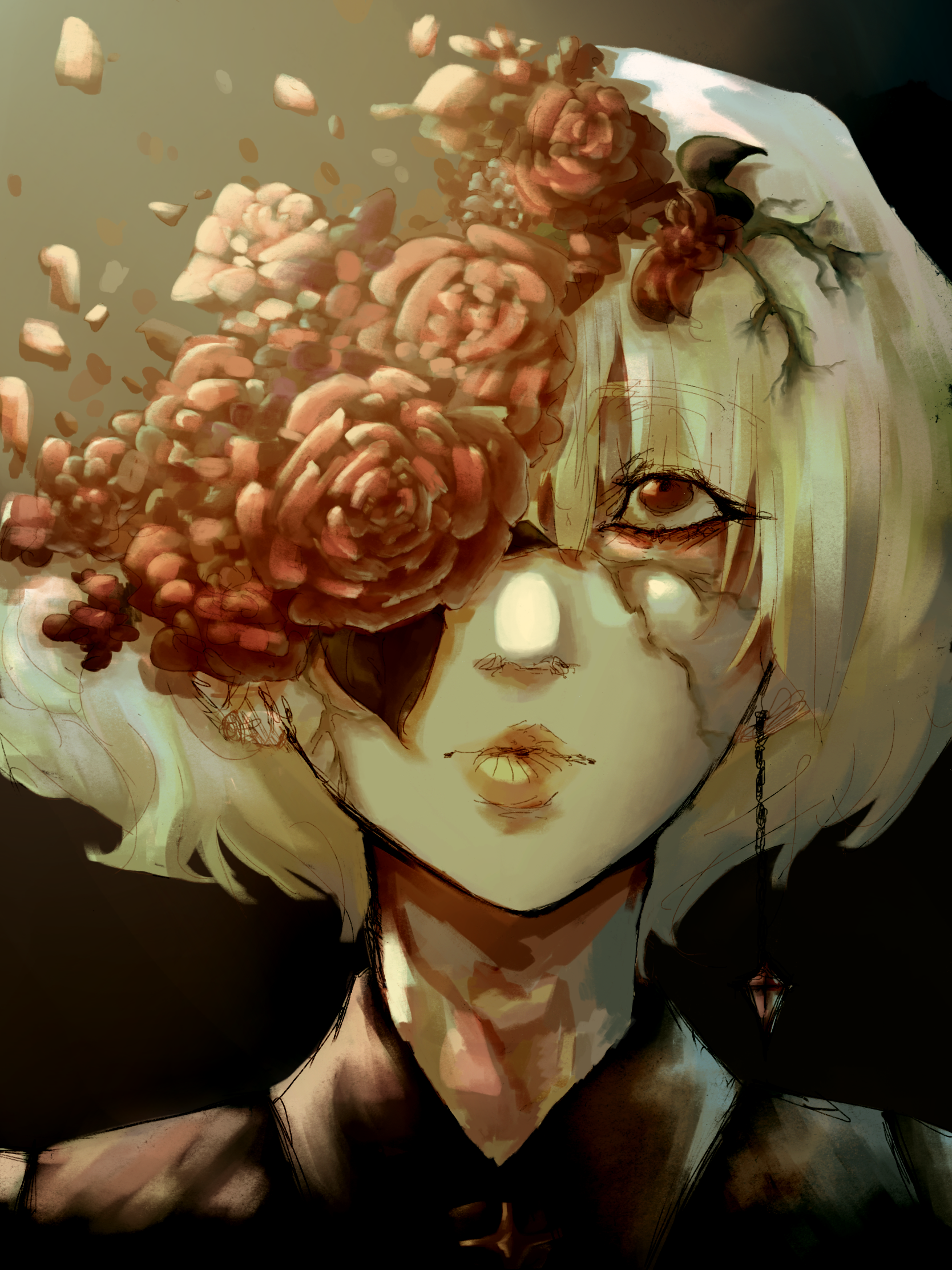
Digital art by 8th grade student artist 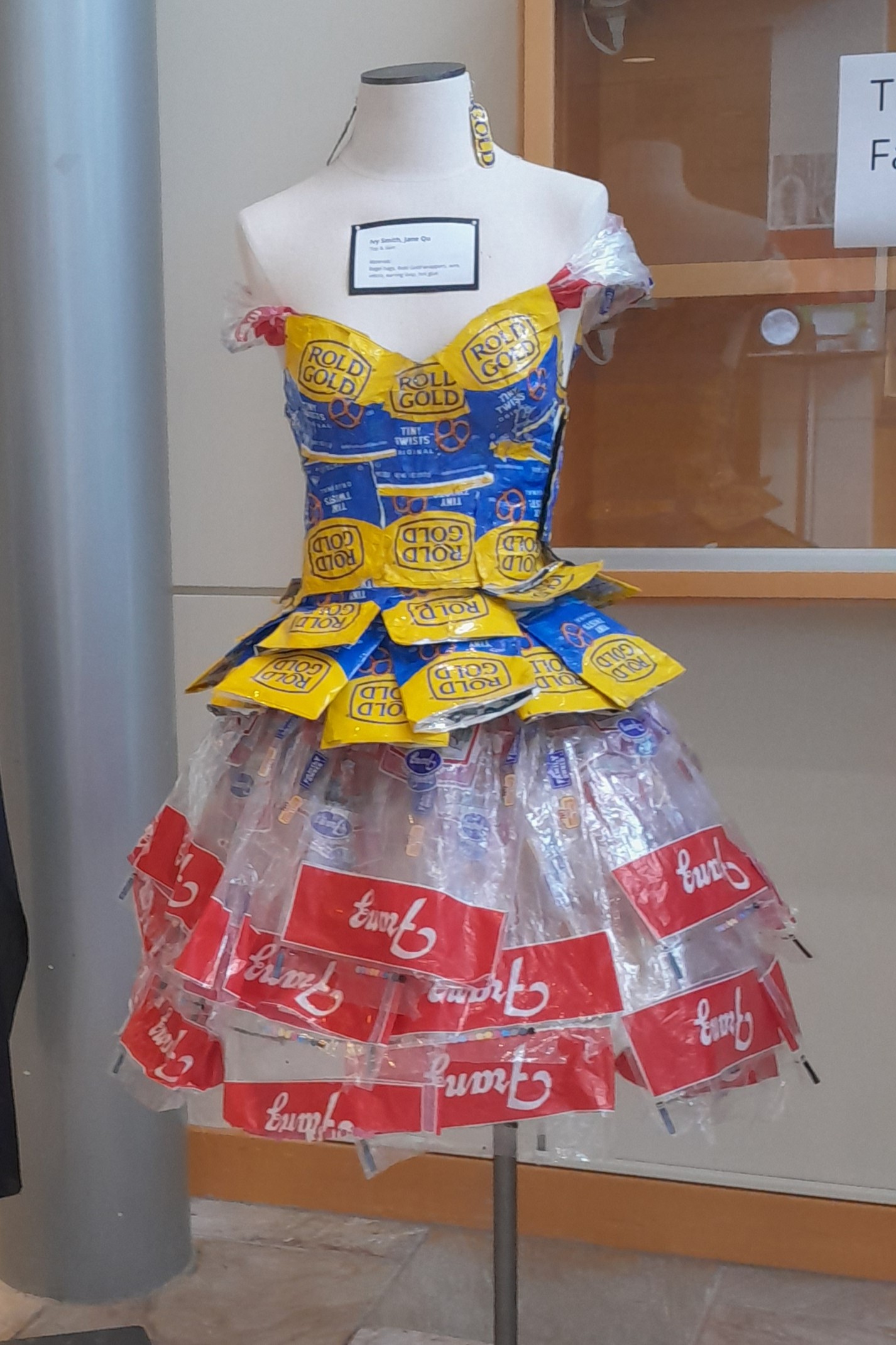
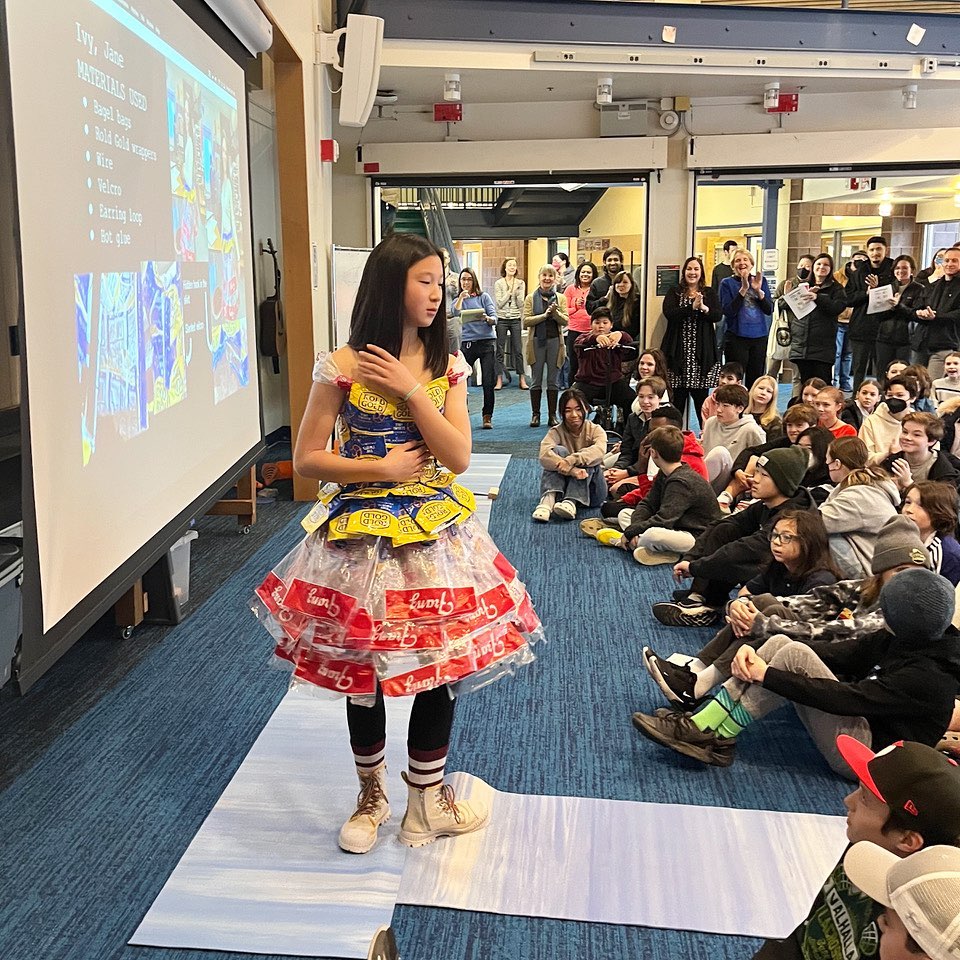
Bodice and skirt by 8th grade art students, made from reclaimed snack waste. 
Figurative ceramic mug made by 7th-grade student artist. 
Graphite drawing by 9th grade student, made for a grid portrait drawing assignment. 
Reduction linocut print series by 12th grade artist. 
Middle school student exploring pattern 
Altered book by 12th grade artist.
In the Classroom


I practice:
Student-centered instruction: Students are challenged to make meaning through inquiry-based lessons, group activities, and long-term personal projects, not lectures or endless slideshows
Culturally responsive teaching: Students learn through multiple methods, including social engagement, kinesthetic activity, sketching, writing, and modeling. Diversity is highlighted as a strength, and cultural examples are inclusive and representationally diverse.
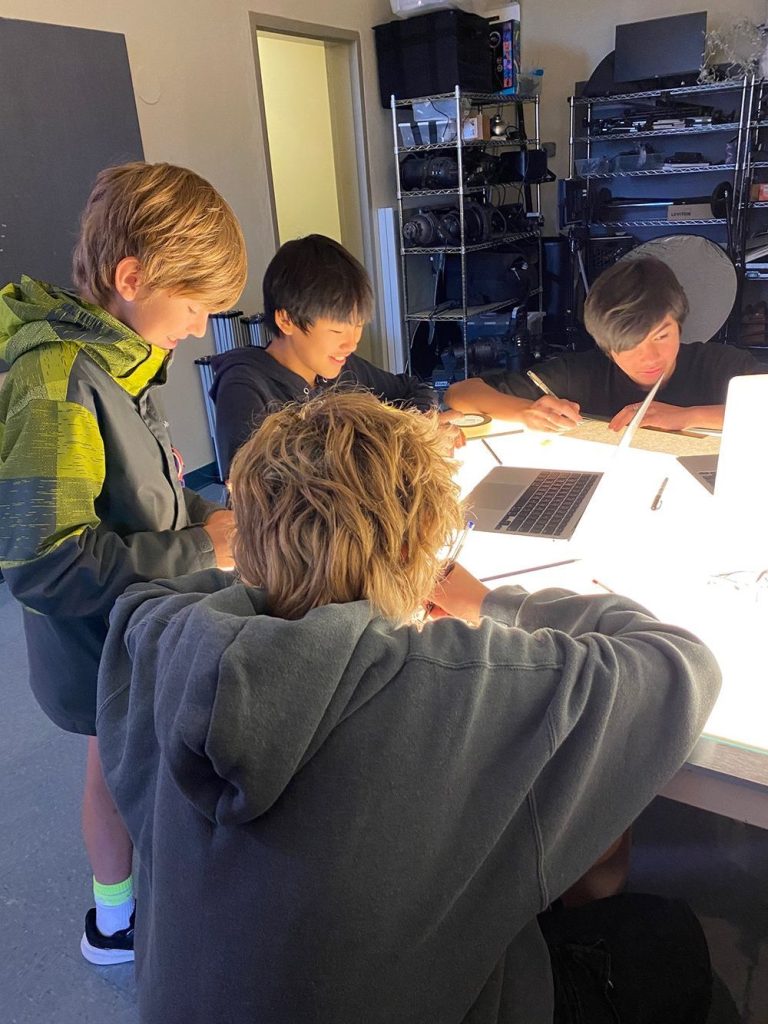
Restorative practices in the classroom: Students participate in regular check-ins, circle shares, and community-building games. Difficulties are resolved through communication and fair consequences, not punishments.
High expectations for student learning: Drawing from national visual arts standards, all students are expected to think critically about their own artwork, respond to art, present and share their work, and develop an understanding about the cultural context of art-making.
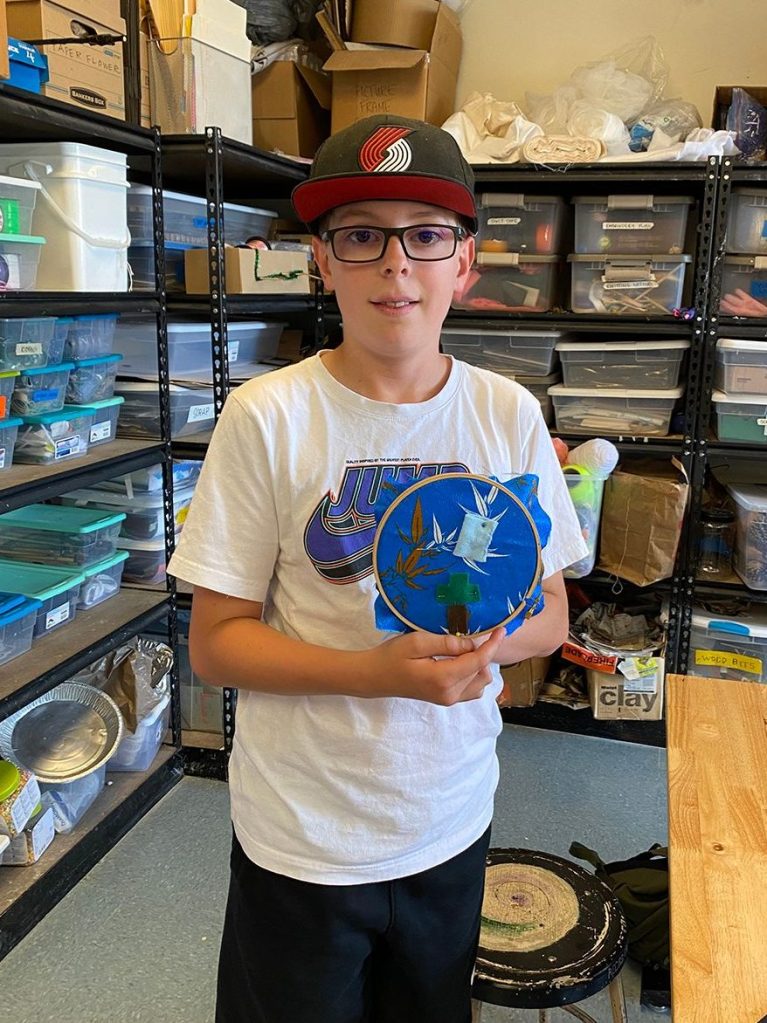
Differentiation for all students: Advanced students are allowed further growth through challenge questions. Students in need of more support are provided with thorough scaffolding, including word banks, visual aids, graphic organizers, modeling, and discourse supports. All students are given timely feedback and improvement strategies.
Interdisciplinary study: Meaningful art is inspired by social issues, scientific study, and an evolving discourse with world issues. Students draw from background knowledge, personal experience, and real-world inquiry to create meaningful art with connections to neuroscience, anthropology, history, and other disciplines.
Technology and digital learning in the classroom: Students learn to create by working with their hands. Their learning process is supported with online file-sharing; media tools such as Pinterest, blogs, and Google platforms; and select use of video examples.
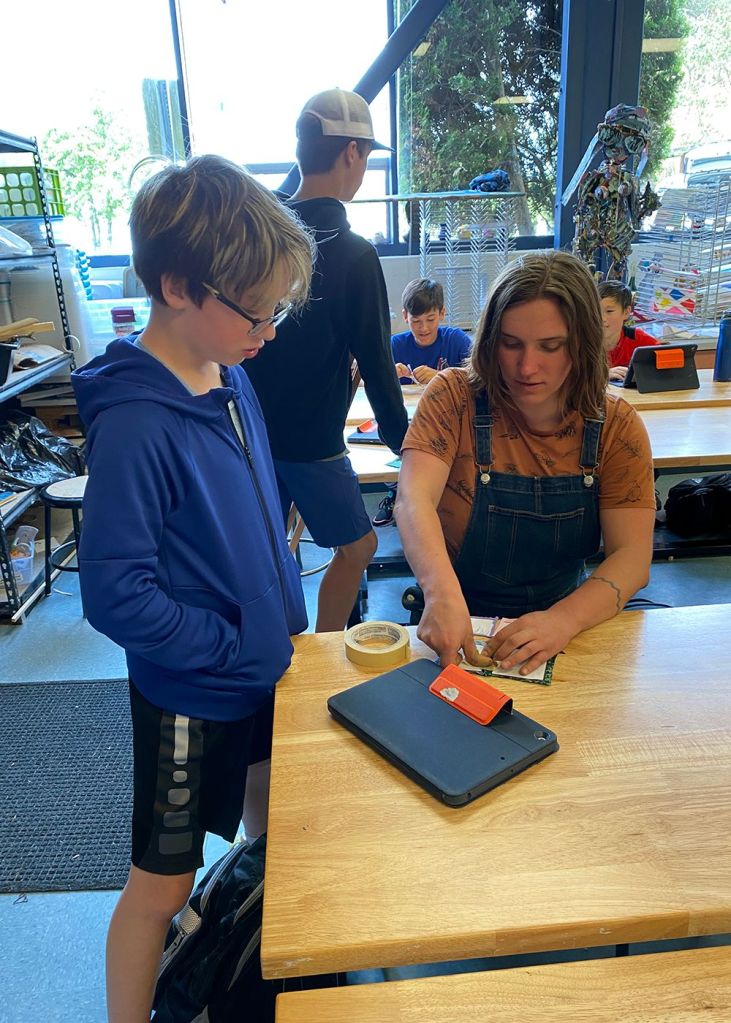
Qualifications
- Oregon Preliminary Teaching License, Secondary Visual Arts
- MAT, Visual Arts, Lewis & Clark Graduate School of Education and Counseling, 2020
- BA, Sustainable Agriculture & Interdisciplinary Arts, Evergreen State College, 2014
 ariella-sophie sternberg